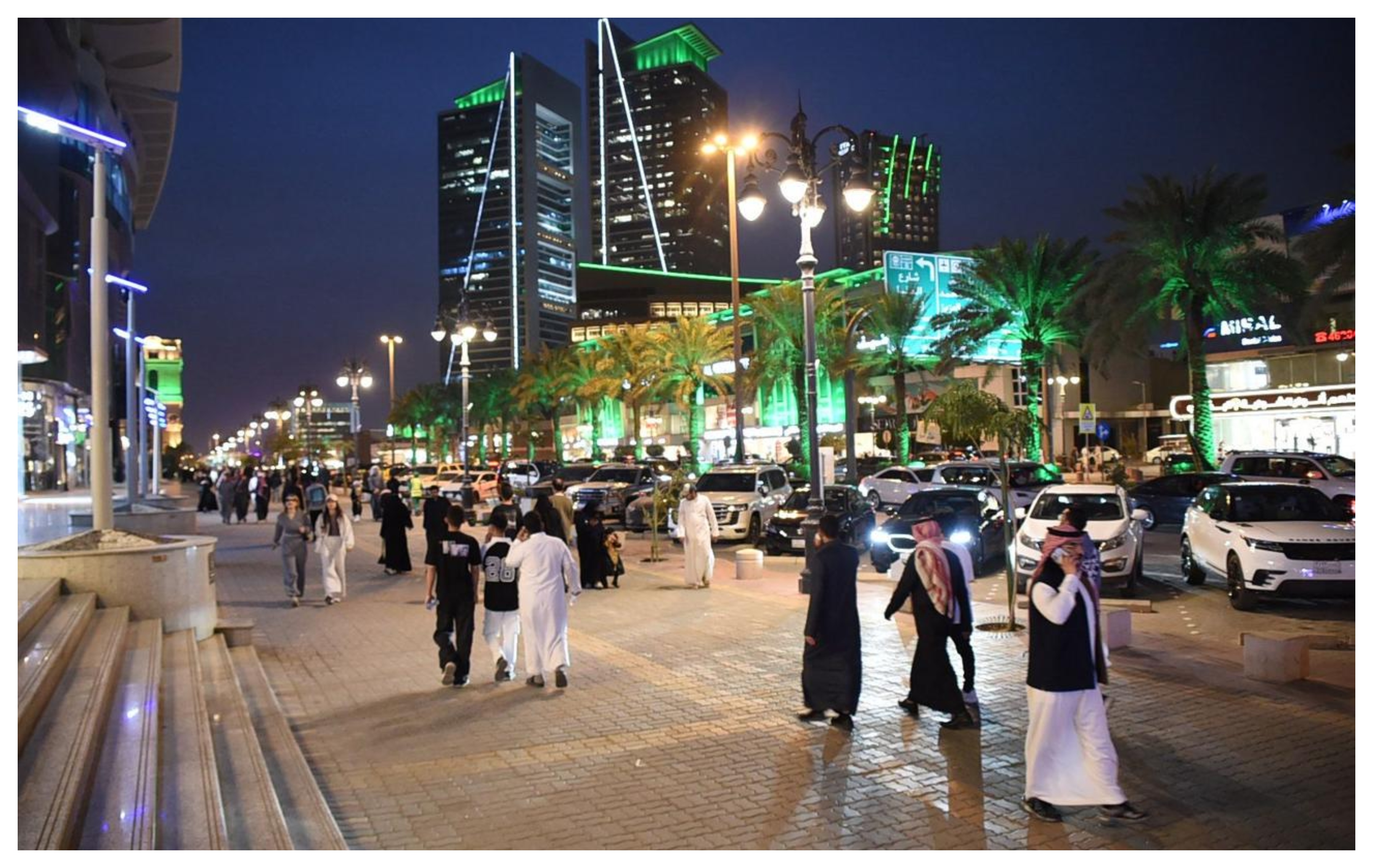
Saudi Arabia, Somalia and Russia have recorded higher levels of perceived night-time safety than the United Kingdom, France and Australia, according to Gallup's 2026 Global Safety Report, despite security challenges affecting the Middle East, the Horn of Africa and Eastern Europe. Gallup's 2026 Global Safety Report found higher perceptions of night-time safety in Saudi Arabia, Somalia, and Russia than in the UK, France, and Australia. Follow-up surveys during recent regional conflicts showed little change in perceived safety among Gulf states like Saudi Arabia and Bahrain. The report highlights that personal feelings of safety do not always align with national security threats or actual crime rates. Countries affected by conflict, like Somalia and Russia, reported higher personal safety feelings than some stable Western nations. The findings reveal a contrast between countries facing armed conflicts and established Western economies, suggesting that national security threats do not always determine how safe people feel in their communities. According to Gallup's 2026 Global Safety Report , 95% of adults in Saudi Arabia said they felt safe walking alone at night, placing the Gulf kingdom third globally behind Singapore and the United Arab Emirates (UAE), which each recorded 96%. Other Middle Eastern countries also performed strongly, with Kuwait recording 93% and Bahrain 92%, placing them among the world's highest-scoring nations. Somalia led sub-Saharan Africa with 74%, ranking ahead of Mauritius at 62% and South Africa at 35%, despite its continuing struggle against the militant group Al-Shabaab. The Horn of Africa nation also scored higher than Russia at 72%, the UK and France at 71% each, Israel at 70%, Australia at 64% and Türkiye at 57%. Meanwhile, the United States recorded 78%, placing it ahead of Somalia and Russia but behind several Gulf countries, including Saudi Arabia and the UAE. Gulf countries maintain strong safety scores amid regional conflict Saudi Arabia's performance comes against the backdrop of the conflict involving Iran, Israel and the United States , which brought missile and drone attacks to several Gulf countries in 2026. Although Gallup collected the main survey data in 2025, before the hostilities began, researchers conducted follow-up interviews in Saudi Arabia and Bahrain to examine whether the fighting had affected perceptions of everyday security. Between May 12 and June 6, 96% of Saudi respondents said they felt safe walking alone at night, compared with 95% in the previous survey. Bahrain also maintained a high score of 93%, suggesting that the conflict had not substantially weakened residents' confidence in their immediate surroundings. Gallup described the Gulf countries' performance as "especially notable" given the recent turmoil in the region. Somalia and Russia outperform several Western countries A similar trend was recorded in Somalia , where decades of instability and attacks by Al-Shabaab have not stopped residents from reporting relatively high levels of personal safety. Nearly three-quarters of respondents said they felt safe walking alone at night, exceeding the shares recorded in several European countries and Australia. Russia also scored higher than the UK and France despite its continuing war with Ukraine, although the difference was just one percentage point. Ukraine recorded 64%, matching Australia, even as the country continued to face military attacks following Russia's full-scale invasion in February 2022. These results illustrate why concerns about national security may differ from people's experiences in their neighbourhoods. Why conflict-affected countries can record higher safety scores The 2026 report draws on interviews conducted in 2025 with 143,620 adults aged 15 and above across 140 countries and territories, using nationally representative, probability-based samples. Participants were asked whether they felt safe walking alone at night in the city or area where they lived, allowing researchers to compare perceptions of everyday security across countries. Beyond these responses, the study examined national prosperity, homicide rates and armed conflict to understand their relationship with personal safety. Researchers found that national wealth and homicide rates were more consistently associated with feelings of security than the severity of armed conflict. War, however, had a stronger relationship with whether respondents identified safety and security as their country's most important problem. Globally, 69% of adults reported feeling safe walking alone at night, compared with 74% in the Middle East and North Africa. The rankings reflect residents' perceptions rather than actual crime rates or the dangers of war, meaning higher scores do not necessarily indicate greater overall safety. As Gallup concluded, "People can feel safe in their communities even when their countries face serious security challenges."
Read also KDF Changes December Recruitment Dates and Centres